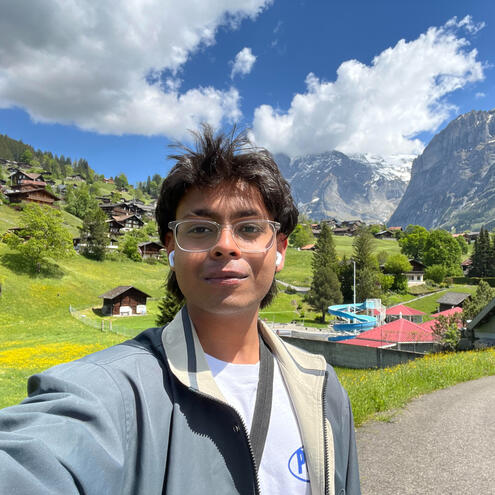
Hi, I'm Kshitij Khandare
I’m a game designer with a strong focus on creating engaging player experiences through storytelling, thoughtful design systems, and collaborative development. Throughout my education, I gained hands-on experience in level design, gameplay prototyping, narrative integration, and agile production pipelines. I thrive on transforming ideas into playable realities by designing mechanics and crafting levels that tell stories.I am now seeking opportunities to apply my technical skills in design, production, and problem-solving within the games industry, where I can continue to grow as a designer and contribute meaningfully to the creation of memorable game experiences.
One Way Ride
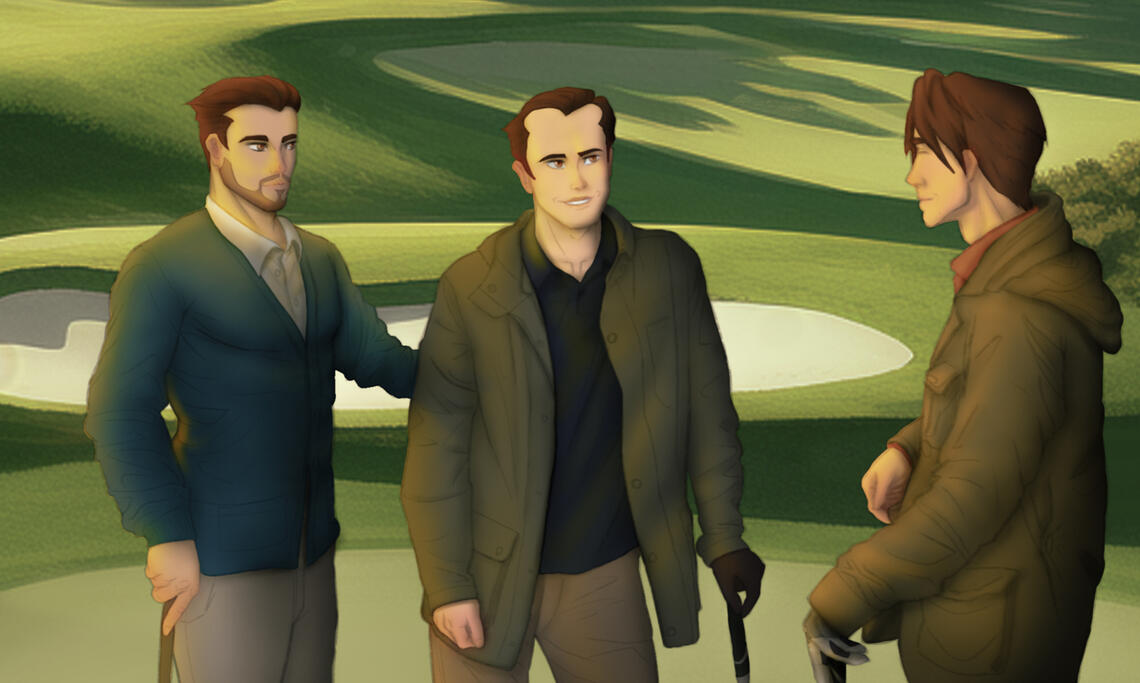
Roles: Lead Narrative Designer, Game DesignerPlay as Mariano Archangela, an astute, systematic, and ambitious member of the Lucchese Crime Family, harbouring a burning desire to ascend the ranks within the family and attain the coveted position of an acting boss one day.
Cave Runners
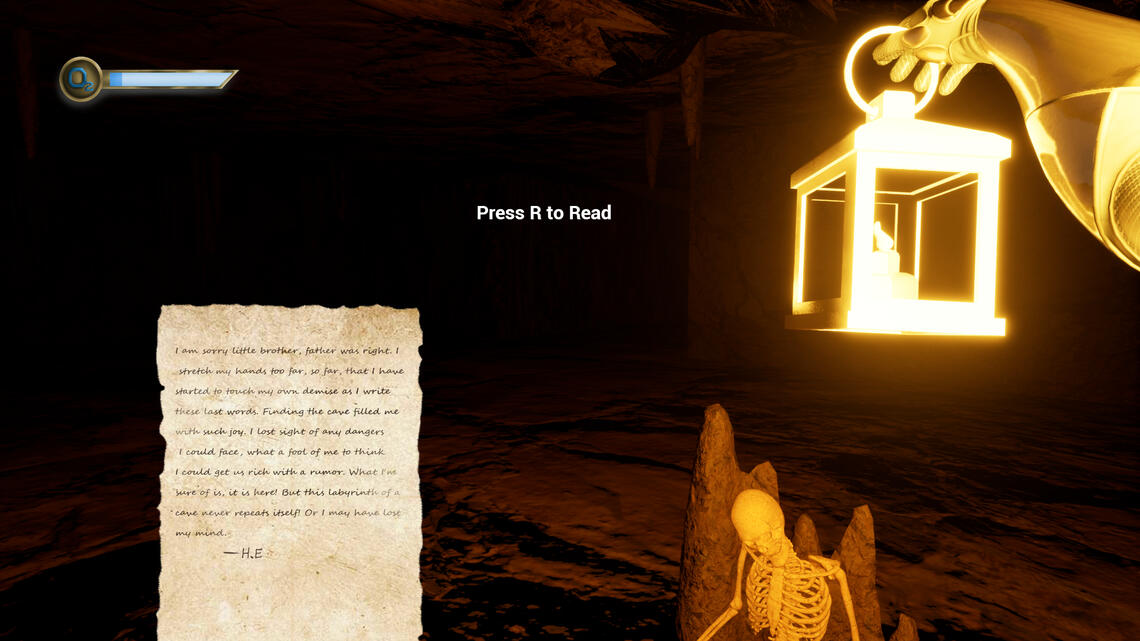
Roles: Lead Game Developer, Game WriterSubmitted to the Abertay Game Development Society's Freshers Jam 2024 which was a week long jam.Led production and development for a 4-person team to develop a horror experience with the theme 'Finite Space'.
stairway from hell
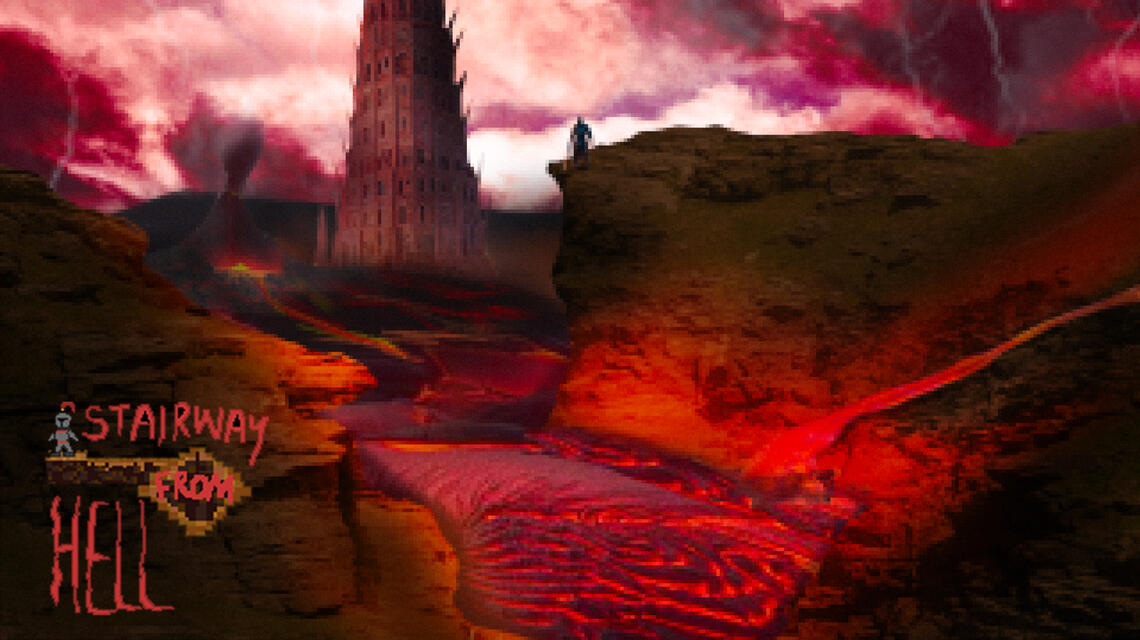
Roles: Level Design & Version ControlThis game was made in part of the Spooky Game Jam at Abertay University which ran the weekend of the 1-3rd November 2024.Collaborated with a 6-person team and created main level along with managing version control on GitHub. The theme for the jam was 'Endless'.
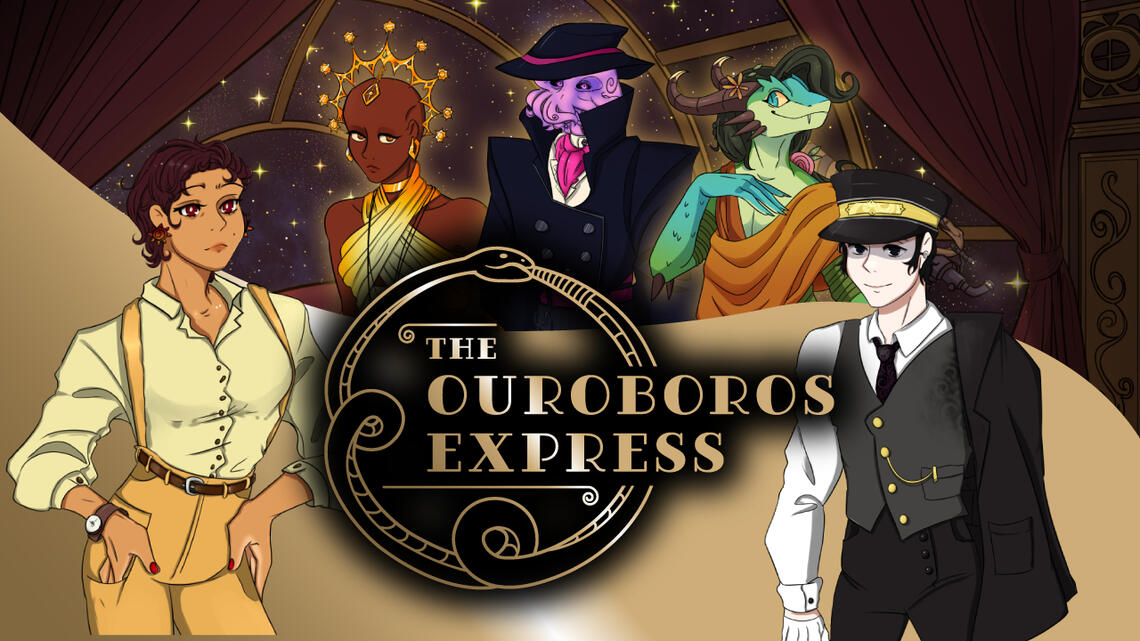
the ouroboros express
Roles: Video Editor and Motion DesignerAs a freelance creator for Small Loan Studio, I crafted the game’s launch trailer and animated the studio and game logos, combining storyboarding, narrative design, and visual creativity using the game’s story and dialogue.
Writing Samples
In-game cutscene script of Chapter 1 of One Way Ride with choices
Item Descriptions of my project Ex Lumine - an Original Fantasy RPG World
Location Bio for City of Hora | Ex Lumine - an Original Fantasy RPG World
Game Design Document of One Way Ride
Game Design Document of Next Stars | Play as a Casting Director for Hollywood.
Let's connect!Reach out to me on LinkedIn or fill in the form below and drop me an e-mail.
ONE WAY RIDE | Explore my process
ROLE
Lead Narrative Designer, Game Designer
MY CONTRIBUTIONS:1. Narrative Design - Developing the plot and writing the game’s full story for the prototype. Writing all in-game dialogue, cutscene scripts and stories of clues and other interactable objects in the game.2. Gameplay Systems - Designed the Intel and exploration system based on Mariano's persona. Created a dynamic dialogue system influenced by player actions.3. Environment Design - Conceptualizing and creating the gas station environment in Blender. Designed interactive clues in the gas station level. Created and hunted assets to finish the level4. Game Design - Conceptualized and wrote the game in a design document. Assisted my teammate as a generalist in other areas throughout game development
In this project, I embarked on a practice-based exploration of game design, focusing on narrative elements. The central challenge was to create an immersive and engaging narrative that seamlessly integrates with gameplay mechanics.Leveraging insights from literature and collaborative efforts with a developer, I crafted story elements such as dialogue, plot, character development, and setting. Additionally, I delved into level design and environment creation to drop the player into the game world.The result is a game prototype that showcases the fusion of storytelling principles and interactive gameplay. Through iterative feedback and adaptation, I navigated the delicate balance between narrative coherence and engaging mechanics. This project underscores the art of storytelling within the dynamic realm of games.
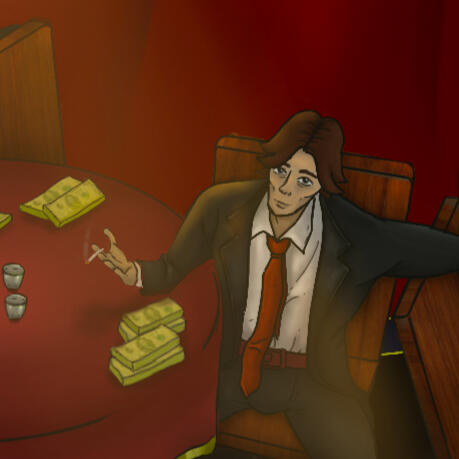
CHAPTER 1

CHAPTER 2
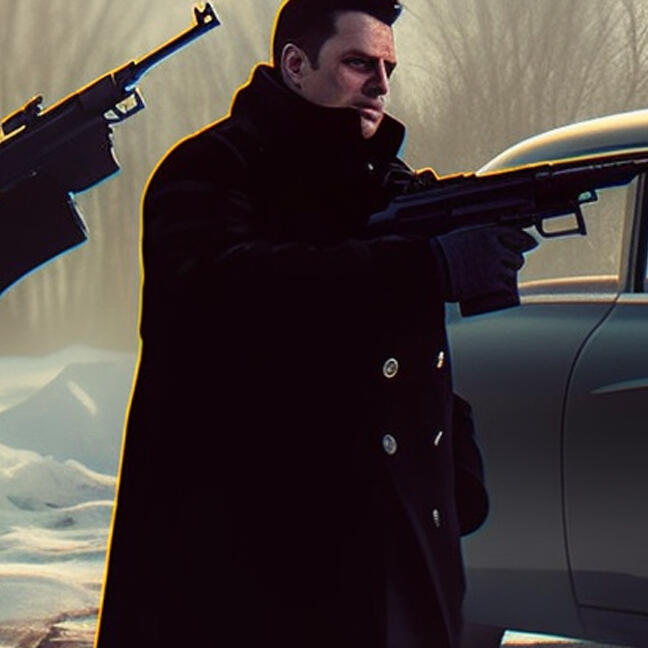
Chapter 1 -The process of establishing world and characters
Chapter One Overview:- Introduction: The player is introduced to a 3D top-down experience, where Mariano believes he's reached the end of the ride.
- Theme of Choices: This chapter sets the stage for the game’s central theme—choices. Mariano suspects that he's reached the end of the ride. The "ride" here is the life he's led so far, a life of crime and full of uncanny choices that leads him here.
- Impact of Player Choices: Player decisions in Chapter One significantly shape the narrative, leading to multiple possible endings.
- Branching Dialogue: Introduction to branching dialogues that reflect past choices, adding layers to the story and connecting to the ending in a future build containing Chapters 3-5.
- Cause-and-Effect: Even in linear chapters, earlier decisions influence both character and plot progression, keeping the player engaged in the theme of choices.
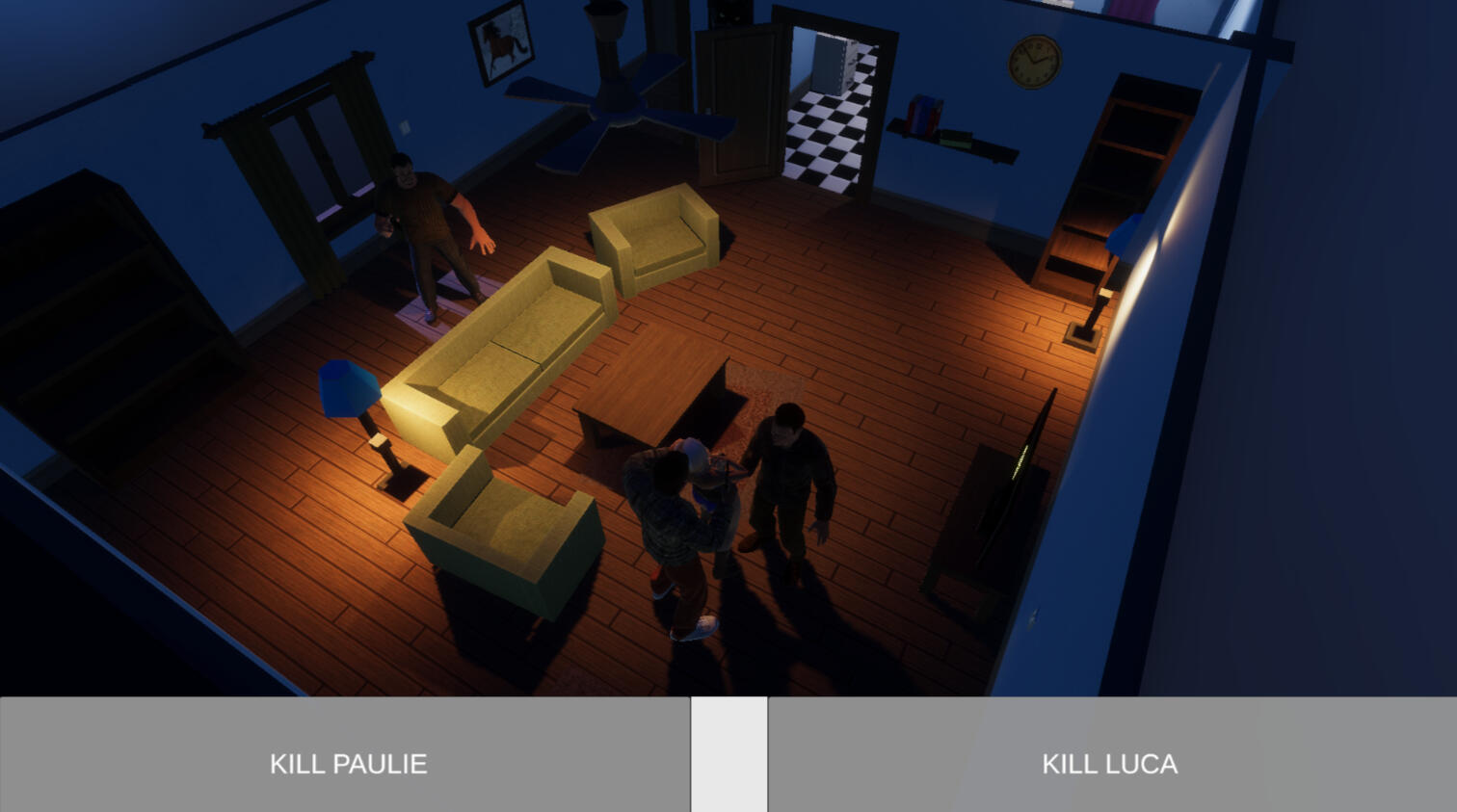
This direction came with its own set of problems, since chapter one is short, there is no time to introduce depth to the characters in the present day, this makes it hard for the player to initially like the protagonist and root for their survival.In this chapter, I had written a stand-off styled confrontation between the three characters as they plan to kill the protagonist, to end this on a cliff-hanger and keep players invested, the protagonist needs to stay alive. This presented me with challenges when it comes to the choice of choosing who to kill in self-defence first, since players cannot feel for any of the characters, the choices look random and insignificant on who to kill and who to spare.This made me re-write some of the dialogue and keep the moment short but fast. As the players will feel the impact of the choices after spending time with the characters towards the climax.Check out how the choices in Chapter 1 affect the multiple endings of the story!
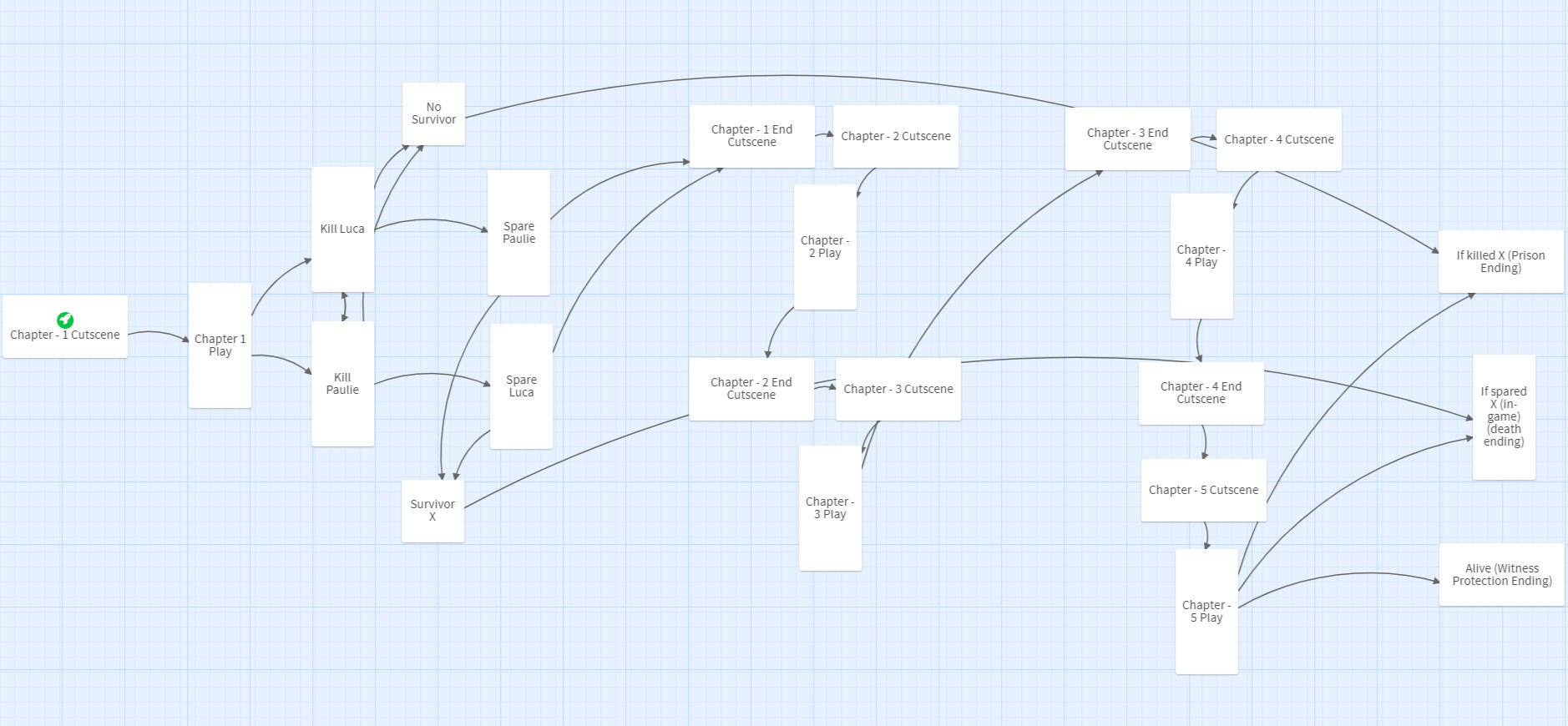
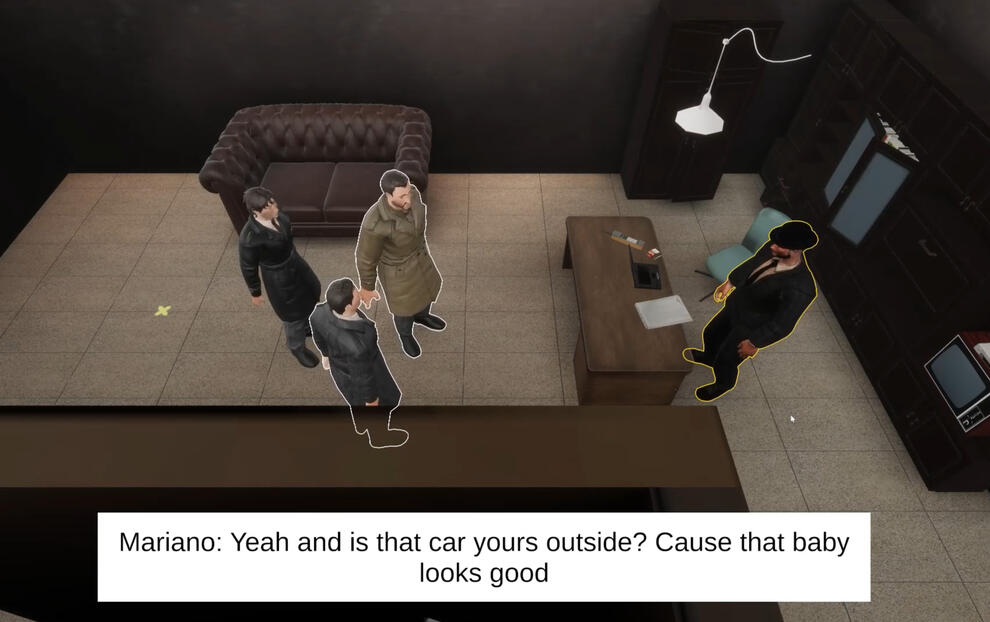
In chapter one, after the prologue is done, the player is introduced to the exploration system and dialogue system which are key elements in the game. The player can interact with certain objects in the scene and the protagonist provides an insight into what those objects mean to him, the world or other characters in the game.
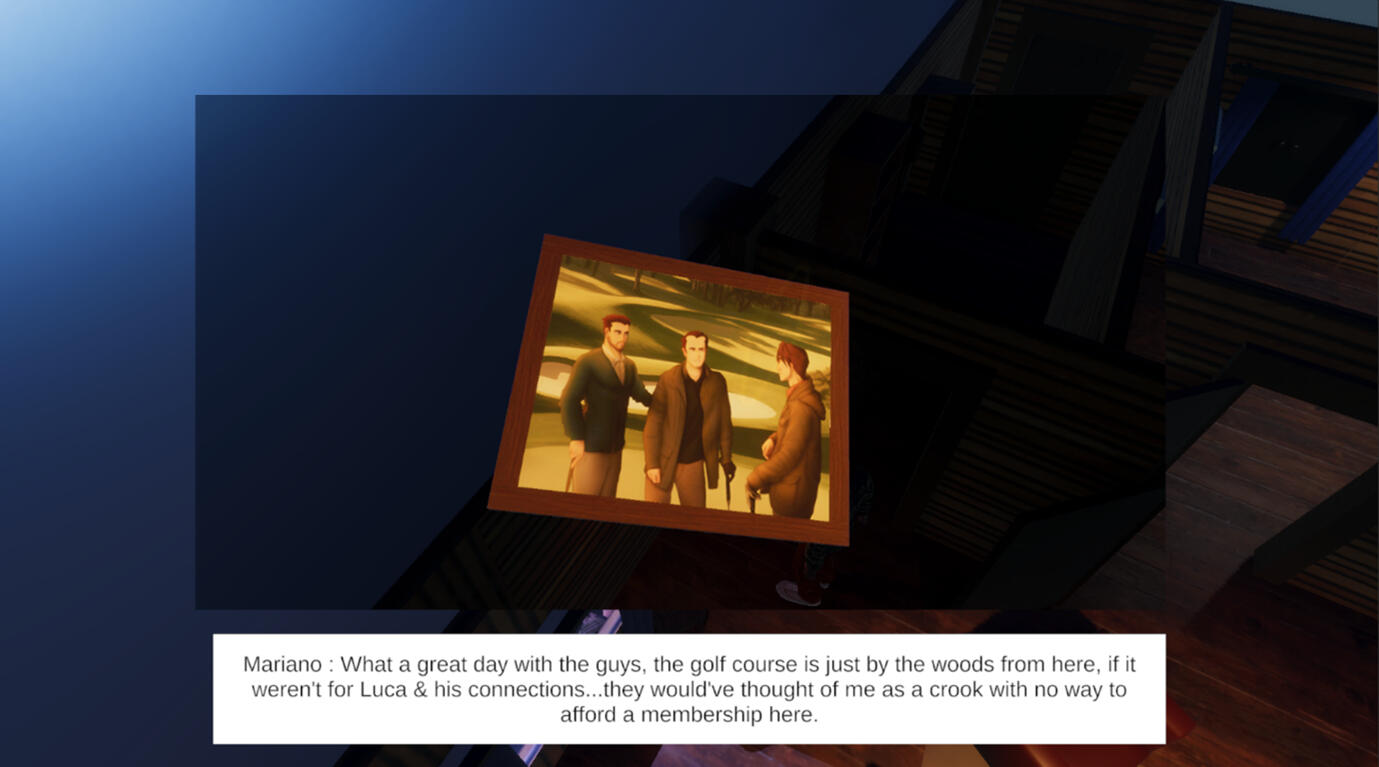
I found this very useful to develop characters as I decided to keep the cutscenes short and focused more on plot development and not character, but using interactable objects in the environment proved to be a valuable solution to the problem as it balances and bridges that gap.
Chapter 2 -Expanding on the story, characters, and gameplay.
Chapter 2 Overview:
Retrospective Storytelling:
The purpose of the retrospective storytelling was to bridge the gap between the present day and the past. By establishing Mariano's ambition, the game's story explores a theme of choices, I wanted to explore the consequences of those choices in Chapter 1. Rewarding player curiosity about what led Mariano to his current state in the crime family was the use of a tried and tested method of episodic storytelling in games.
This brings us to Chapter 2 which takes place in the past, where players experience the unbinding of ties of an unstoppable trio.

Celebratory Cigar box left unopened due to their fallout
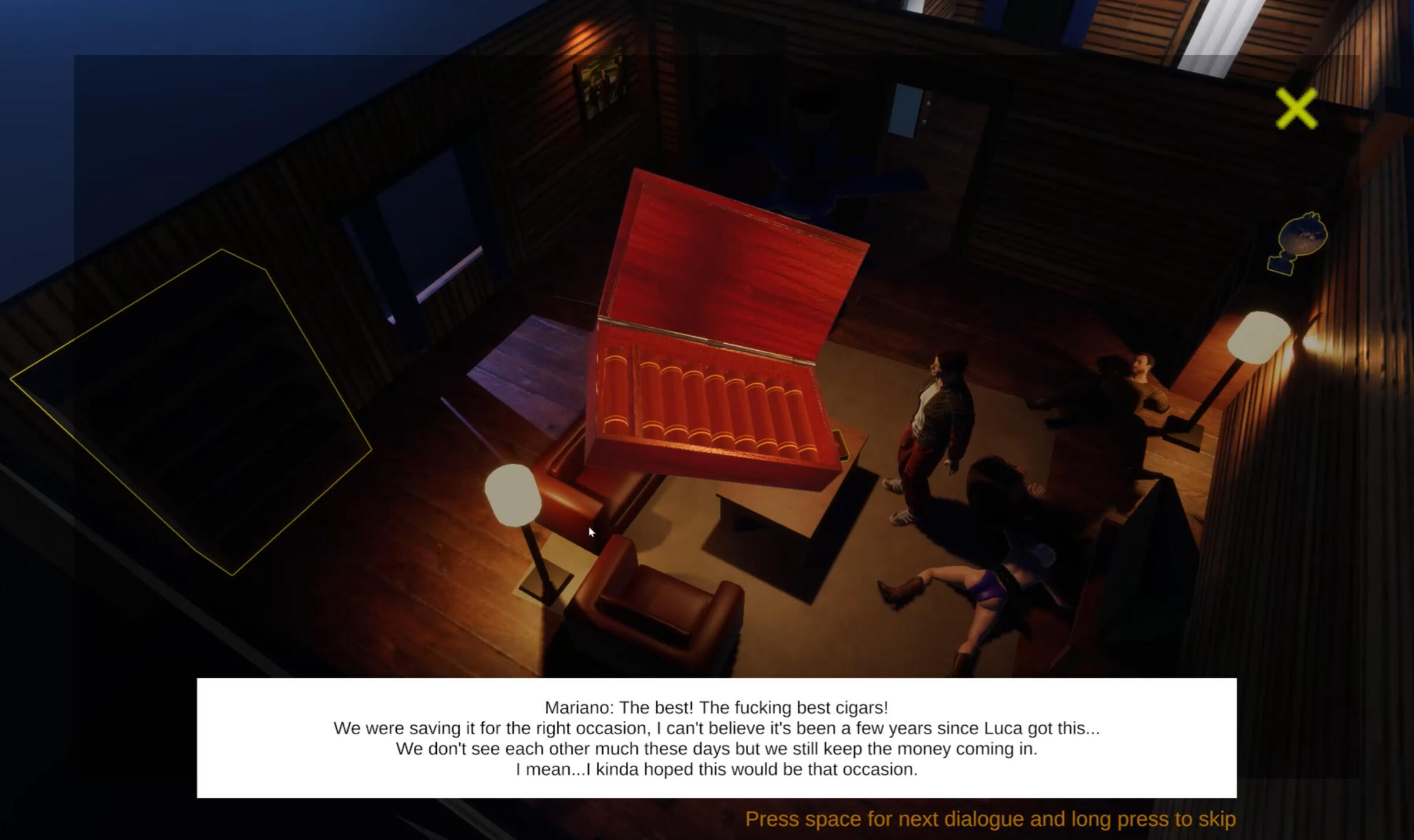
Exploration and Intel System:
Core Mechanic: Players investigate their surroundings, discovering environmental clues that drive the story forward.Impact:
Discovering all clues unlocks unique dialogue chains and story developments.
Missing clues results in alternate, less informed dialogue paths.
Enhances immersion by blending exploration with narrative progression.

Clue 1

Clue 2

Dialogue Unlocked after finding all clues
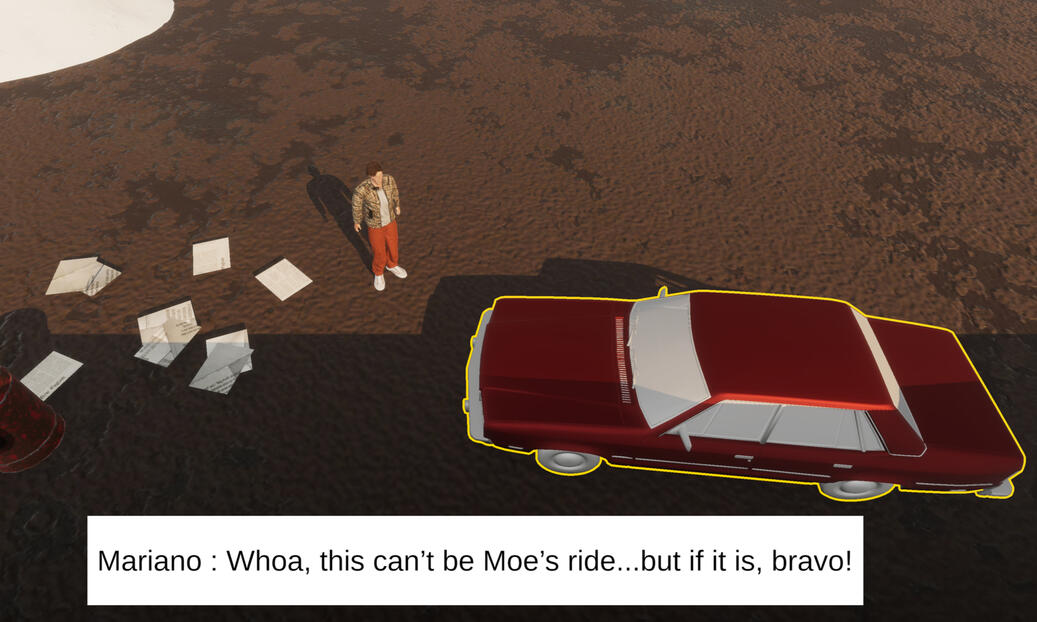
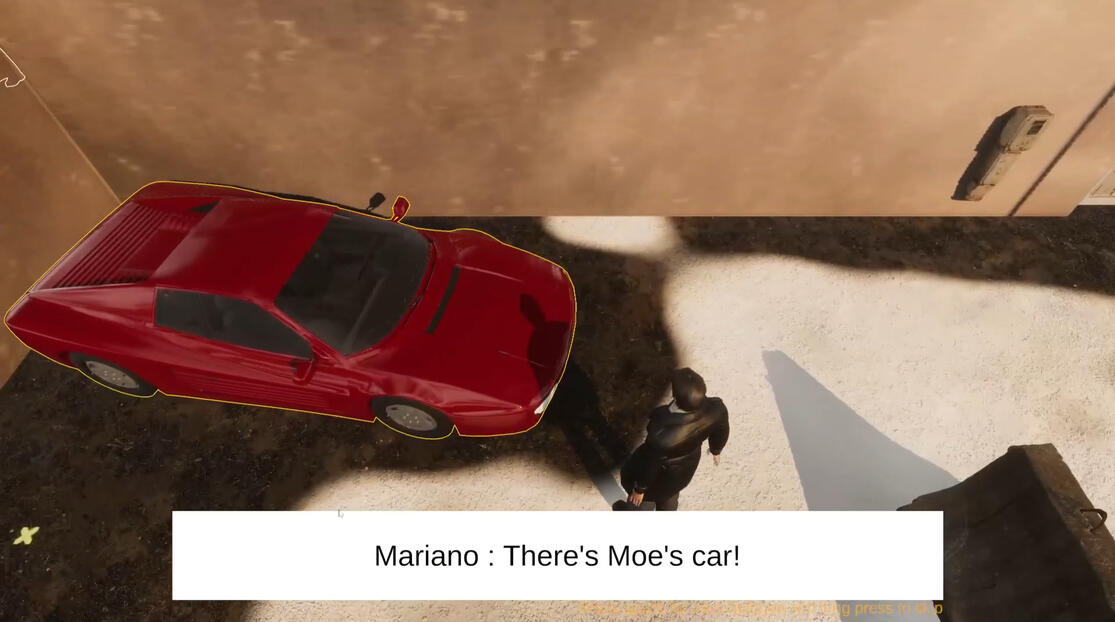
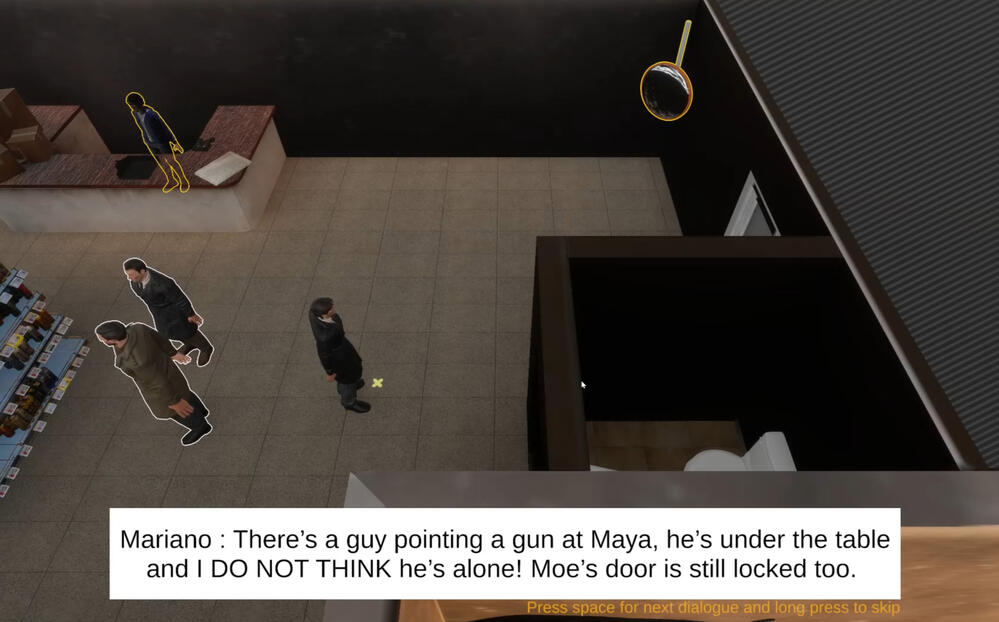
Dynamic Dialogue System:
Foundation: Based on the new Intel system, dialogue evolves depending on the player's interaction with the environment.
Benefits:
Provides tailored storytelling experience based on player choices. Rewards attentive exploration with deeper story insights showcasing Mariano's astute nature.
Action-Driven Gameplay Integration:
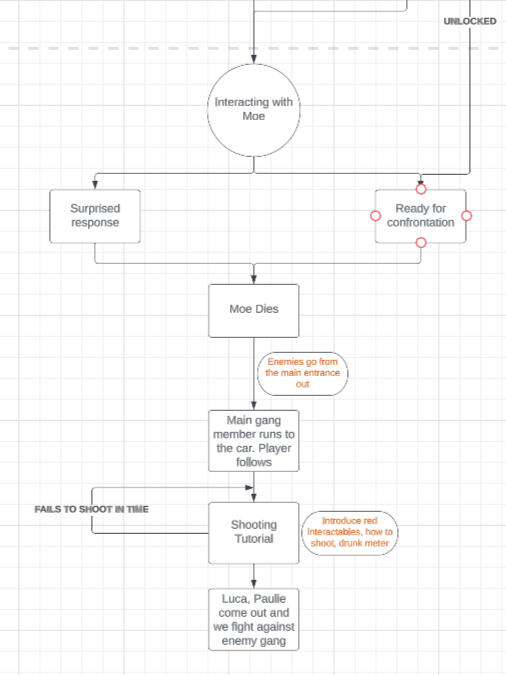
Gunfight Sequence: A climactic battle between Mariano’s crew and a rival gang.Narrative Tie-In:
Progression through the chapter builds tension leading to the confrontation. Contextual clues from exploration enhance the stakes of the fight.
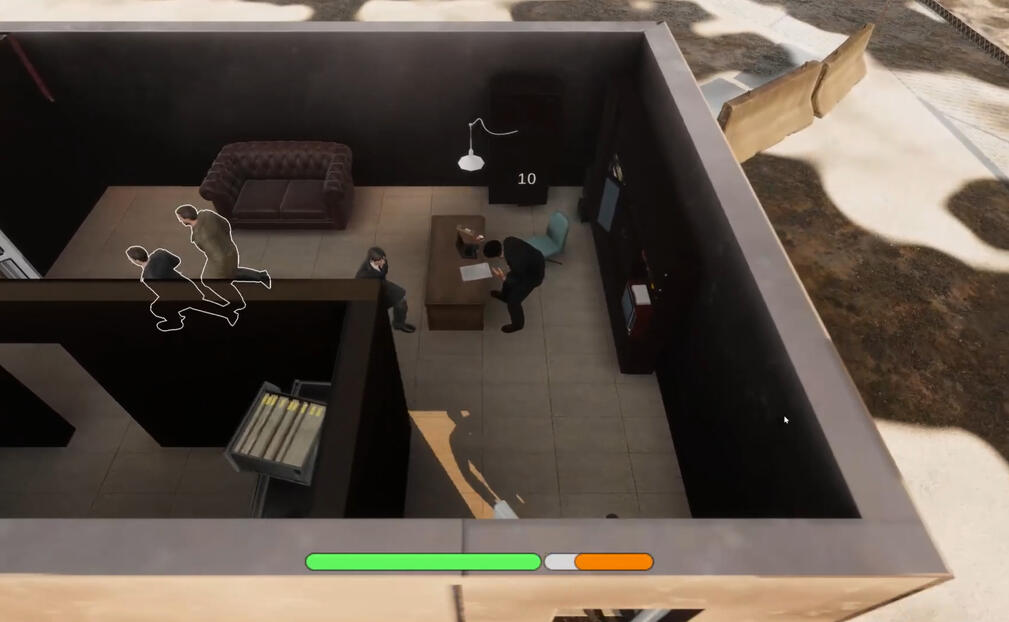
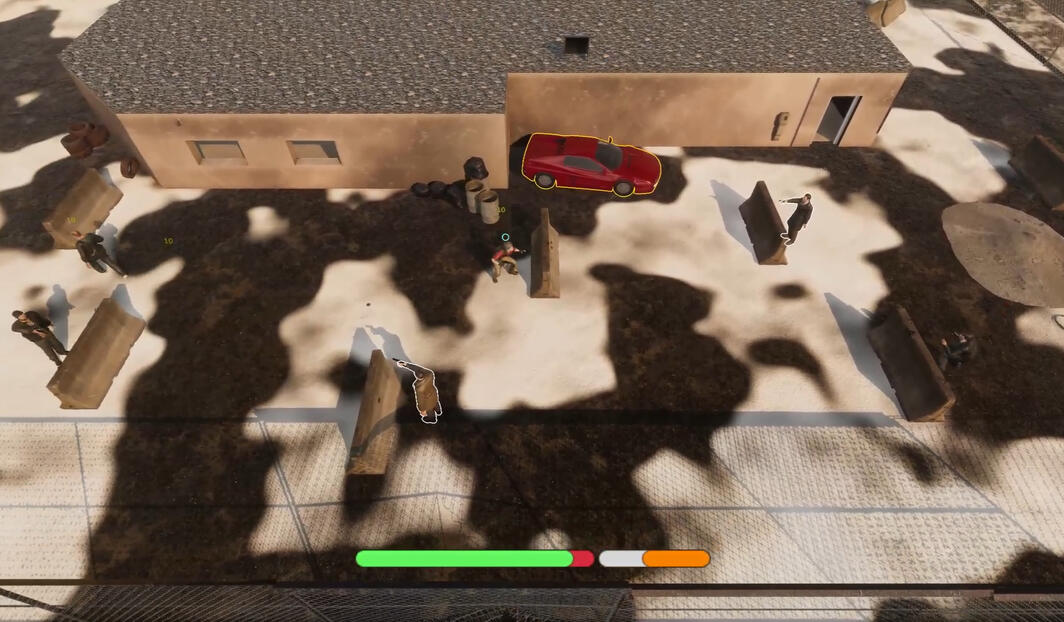
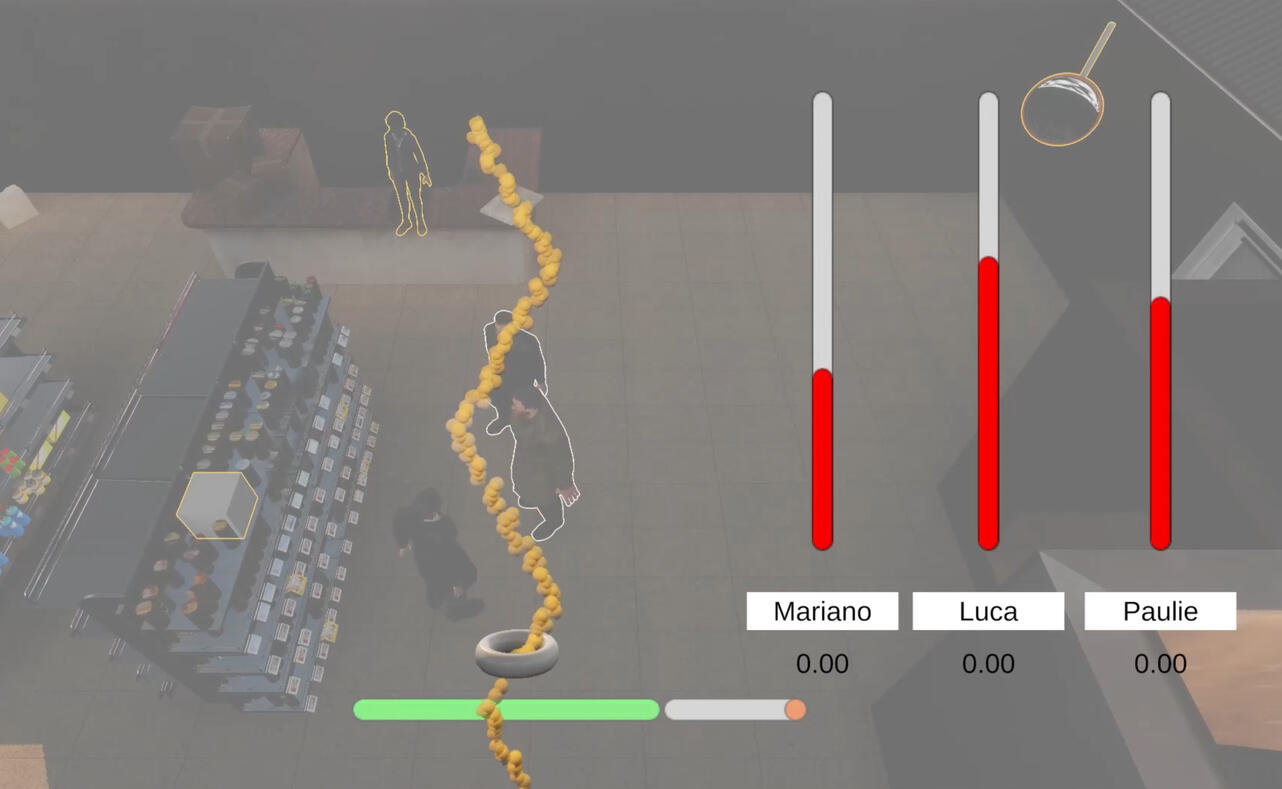
Drunk Meter Mechanic: A unique system tied to character rituals, where a chugging contest affects combat performance.Gameplay Impact :
- Drunk State: Less accuracy but higher damage resistance.
- Sober State: Higher accuracy but reduced damage resistance.
- Players must balance between states depending on their playstyle and combat needs.This mechanic adds depth to character interactions while introducing dynamic challenges to gameplay. Integration of the mechanic was cut due to time constraints, but the chugging contest remained for the purpose of adding depth to the characters.
Balancing Exploration and Narrative Agency:
Challenge: Addressing teammate concerns about skipping exploration entirely.Solution: Emphasized the importance of exploration in building narrative context and maintaining the story-driven focus of the game.Result: Integration of the Intel system ensures exploration is essential for unlocking key story elements without feeling optional.
Summary:
In Chapter 2, the focus shifts from the conflict driven intensity of Chapter 1 to a reflective exploration of Mariano's past exploits, laying the foundation of his eventual downfall. This chapter delves into Mariano's role as a consigliere, highlighting his analytical nature and understanding of the criminal underworld while introducing key gameplay elements intertwined with the narrative.